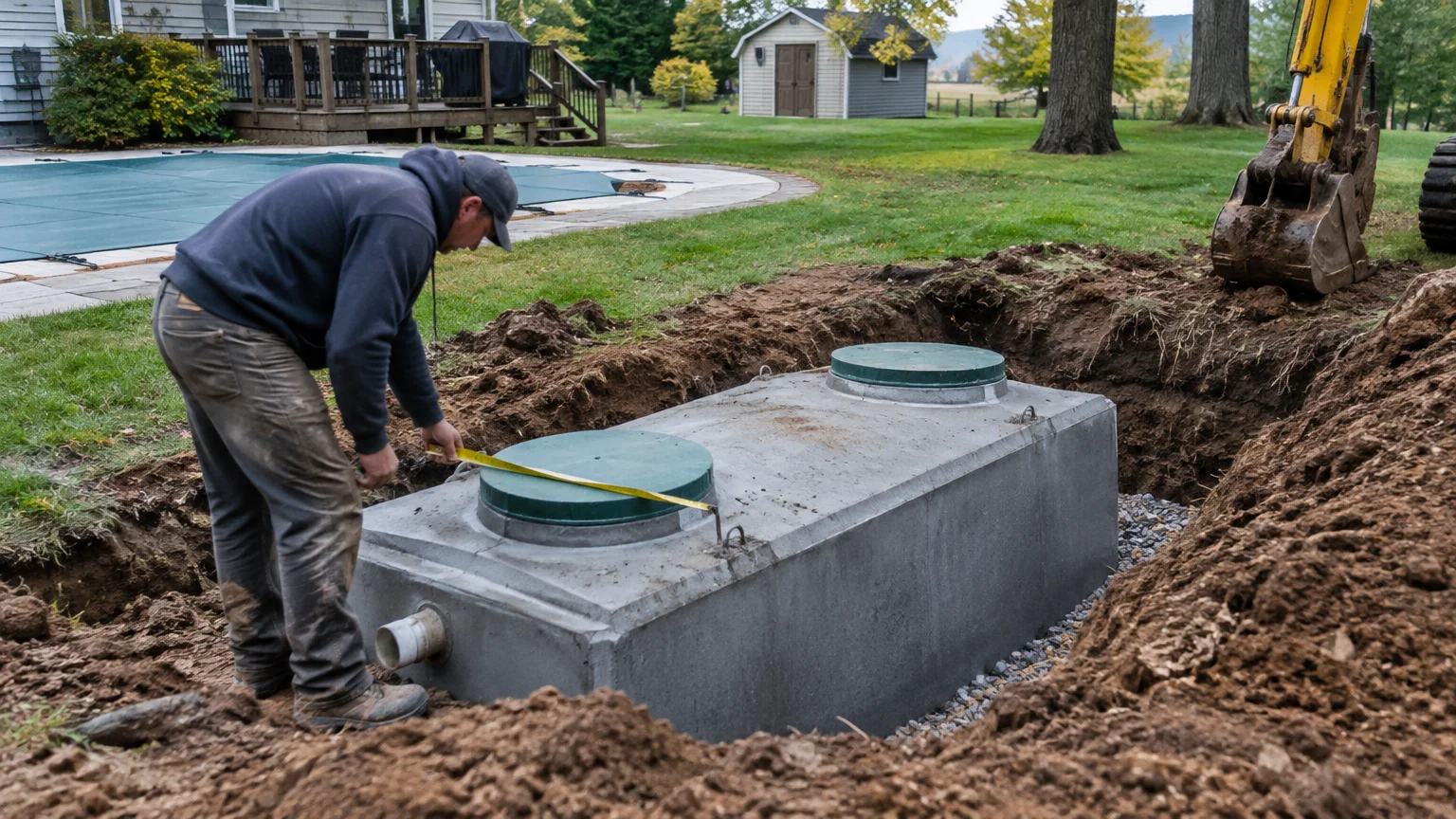
A 1000-gallon septic tank is often about 8 to 10 feet long, 5 to 8 feet wide, and 5 to 7 feet tall. The exact size depends on the maker and tank material. It also needs safe access space, the right burial depth, and room for a pumping truck to reach it.
Table of Contents
- What Are the Typical Dimensions of a 1000 Gallon Septic Tank?
- How Much Space Does a 1000 Gallon Septic Tank Need?
- How Deep Is a 1000 Gallon Septic Tank Buried?
- What Changes the Size and Shape of a 1000 Gallon Septic Tank?
- What Setbacks Apply to a 1000 Gallon Septic Tank?
- How Can You Find a 1000 Gallon Septic Tank on Your Property?
- Is a 1000 Gallon Septic Tank Large Enough for Your Property?
- Key Takeaways
- Frequently Asked Questions
- Conclusion
What Are the Typical Dimensions of a 1000 Gallon Septic Tank?
A 1000-gallon tank can be several feet long, wide, and deep. Many tanks have a footprint of about 40 to 80 square feet. The exact size must come from the maker’s drawing or the property records.
Common Length, Width, and Height Ranges
A common concrete tank may be 8 to 10 feet long. It may be 5 to 8 feet wide. Its height may be 5 to 7 feet. Some tanks are taller, while others have a shorter, wider shape.
These numbers describe the outside of the tank. They do not show the liquid level inside. Wastewater stays below the inlet pipe. The open space above the liquid helps contain solids and gases.
Tank shape also changes the measurements. A long, narrow tank may fit a small yard better. A short, wide tank may suit a more open site. A round tank may use less surface space but need a deeper hole.
A tank’s gallon rating does not show its full size. Two tanks may hold the same amount but have different measurements. Always check the actual model before planning work.
Why Actual Dimensions Vary by Manufacturer
Makers use different molds, wall thicknesses, covers, and inner parts. Concrete tanks often have thick walls. Plastic and fiberglass tanks may have thinner walls, but they need careful support during installation.
The inlet and outlet positions matter too. A tank with unusual pipe locations may need more room for trenches. Some tanks have access openings built in. Others need risers and covers added later.
Property owners can ask for the tank model, maker’s sheet, or installation record. These records give better details than a general size chart. Septic Tank Service Snellville can also help property owners understand which measurements matter before septic tank pumping or repair work.
How Much Space Does a 1000 Gallon Septic Tank Need?
A 1000-gallon tank needs more room than its visible footprint. The digging area must allow space for placement, pipe work, bedding, backfill, and checks. Heavy equipment also needs a safe path to the site.
Tank Footprint Versus Excavation Space
The tank footprint is the ground area under the tank. The excavation area is larger. Workers need room to lower, level, and connect the tank. Soil may also require a wider or deeper work area.
The needed space depends on the tank material and work plan. Concrete tanks are heavy and may need lifting equipment. Plastic tanks are lighter but may need anchors where groundwater can make them move.
Keep the area clear of sheds, fences, trees, and parked cars. Roots can harm pipes or make digging harder. Structures over the tank can block future checks and pumping work.
A clear route remains useful after installation. Pumping trucks need a safe way to reach the access covers. A long hose may reach in some cases, but the work area must still be safe.
Access Requirements for Inspection and Pumping
A tank should have safe covers that workers can find and open. Newer systems often use risers. A riser brings the cover closer to the ground, which reduces digging during service.
The riser should stay visible and protected from lawn tools. It should not sit where cars can drive over it unless it was built for that weight. Loose or damaged covers can harm children, pets, and adults.
The access area should let a technician check both sides of the tank. A two-compartment tank may have more than one opening. Good access helps the technician check solids, scum, baffles, filters, and damage.
Before a pumping visit, owners can clear small items near the risers. They should not open the tank. Entering or opening a septic tank can expose people to toxic gas and other dangers.
How Deep Is a 1000 Gallon Septic Tank Buried?
A 1000-gallon tank may sit just below the ground or several feet down. Its depth depends on pipe slope, soil, weather, tank design, and local rules. The covers must remain easy to reach for checks and pumping.
Typical Burial Depth and Riser Placement
Many tanks have a top that sits a short distance below the finished ground. Other tanks must sit deeper to match the sewer pipe from the home. Deep tanks often need risers that bring the covers up.
The inlet pipe needs a steady slope from the home to the tank. If the tank sits too high or too low, wastewater may not flow well. Installers check the heights before digging.
Risers should be strong, sealed, and covered safely. A low riser may become hidden by soil or grass. A high riser may create a trip risk or make mowing harder.
Do not guess the depth by pushing a metal rod into the ground. This can harm a pipe, tank, or utility line. Records or a careful locating service provide a safer answer.
How Soil, Slope, and Frost Affect Installation Depth
Sloped land can change both the tank location and its depth. An installer may place the tank farther from the home to keep wastewater flowing. A level site may need a different plan.
Soil type matters too. Sand, clay, rock, and groundwater each create different concerns. The tank needs firm support and the right backfill. Poor support can cause movement, pipe stress, or damage.
Cold weather can also affect the work. Frost and ground movement may change the needed depth. A local designer or health department can explain how Snellville conditions affect the plan.
Do not add soil over a tank without checking the covers and pipes first. Extra soil can make pumping harder and add stress. It may also hide signs of trouble.
What Changes the Size and Shape of a 1000 Gallon Septic Tank?
The capacity may stay the same while the tank shape changes. The material, inner design, and site all affect the outside measurements. The tank must also connect to the pipes and meet local approval rules.
Concrete, Fiberglass, and Plastic Tank Designs
Concrete tanks are strong and heavy. Their thick walls can make them wider or taller than other tanks. They often need lifting equipment and a firm base.
Fiberglass tanks are light and resist some types of damage. They may be long, narrow, or round. They must be set correctly because movement can harm the tank or pipes.
Plastic tanks are light and may fit some sites well. They may need anchors in areas with a high water table. The installer must follow the maker’s rules for bedding and backfill.
No material fits every property. The right choice depends on soil, access, groundwater, local rules, and the full system plan. Do not choose a tank by gallon capacity alone.
Single-Compartment and Two-Compartment Layouts
Some 1000-gallon tanks have one main compartment. Others have two sections divided by a wall or baffle. A two-compartment design helps control how solids and liquid move.
The inner layout affects where workers inspect and pump. It can also change where the covers sit. A tank with two sections may need openings over more than one area.
Baffles help control flow at the inlet and outlet. An effluent filter helps keep solids out of the drainfield. These parts need regular checks and cleaning.
Keep records about the tank design. Future workers may need to know about sections, filters, baffles, and access points. These records also help new owners after a sale.
What Setbacks Apply to a 1000 Gallon Septic Tank?
Setbacks are required spaces between a septic tank and nearby features. Rules may apply to homes, wells, property lines, driveways, streams, lakes, wetlands, and other water sources. Local rules and site conditions decide the exact distances.
Clearances From Homes, Wells, Property Lines, and Water
A tank usually needs space from the home. This helps keep leaks and repair work away from the structure. It also needs space from wells and surface water to help protect drinking water.
Property lines and driveways may have their own rules. A tank near a property line can cause access or ownership problems. A tank under a driveway may need extra design and load protection.
Pools, decks, patios, sheds, and large trees may also affect the layout. The tank and drainfield need protection from building work and heavy loads. Know the system location before adding new yard features.
Why Local Health Department Rules Matter
Septic rules differ across the country. The local health department may review the site plan, soil, tank size, setbacks, and drainfield. These rules may also guide repairs, replacements, and home sales.
A perc test is a soil test. It shows how fast water moves through the ground. An approved soil worker or site evaluator usually performs it under local rules.
A septic designer, licensed installer, or health department can explain the rules for Snellville, Georgia, and nearby areas. This includes Downtown Snellville, Loganville, Lilburn, Grayson, Lawrenceville, and nearby communities. Confirm the rules before moving a tank, adding a room, or building near the system.
How Can You Find a 1000 Gallon Septic Tank on Your Property?
The safest way to find a tank is to start with records. Then confirm the location with careful locating methods. Do not open the tank or dig before checking for utilities and system parts.
Using Property Records, As-Built Plans, and Tank Risers
An as-built plan shows the approved locations of the tank, pipes, and drainfield. The health department may have a copy. Past owners, installers, surveyors, or property managers may have records too.
The sewer line from the home can provide a starting point. It often runs toward the tank. Pipes may bend, though, and older systems may not match the first plan. Treat records as a guide, not proof.
Visible risers are the clearest sign. They may look like round covers in the yard. Older risers may be hidden by grass or soil. Never uncover a covered riser with force.
Safe Ways to Confirm the Tank Location
A trained worker can use careful probing, electronic tools, or ground checks. The best method depends on the property and records. Arrange utility marking before any digging.
Never enter a septic tank. It may contain dangerous gas and can trap or injure a person. Even a tank that looks empty is unsafe to enter.
These steps can help narrow the location safely:
- Check the health department for an approved septic plan.
- Follow the sewer pipe route from the building.
- Look for risers, settled soil, or unusual grass.
- Keep people and pets away from open covers.
- Ask a trained worker to confirm the tank before digging.
Septic Tank Service Snellville helps property owners find access points before septic pumping. Careful locating can help prevent harm to the tank, pipes, yard, and underground utilities.
Is a 1000 Gallon Septic Tank Large Enough for Your Property?
A 1000-gallon tank may fit many homes. The right capacity depends on residents, bedrooms, fixtures, water use, and local design rules. Review the tank with the drainfield and full system.
How Household Size and Water Use Affect Capacity
More people often create more wastewater. Long showers, many laundry loads, leaking toilets, and large gatherings can raise water use. A home with few residents may still use a lot of water.
The tank holds wastewater while solids settle and lighter waste rises. It cannot make unlimited water use safe. Too much water can disturb settling and overload the drainfield.
Garbage disposals may add food solids. Water softeners, sump pumps, and roof drains should not send extra water into the system unless the design allows it. These connections can affect system health.
Buyers and investors should request septic records before closing. Records may show tank size, installation date, past checks, repairs, and drainfield location. A larger home or changed use may need a new review.
When a Professional Inspection or Pumping Visit Helps
A professional check can confirm the tank size, condition, access, baffles, filter, liquid level, and leaks. It can also show whether the records match the property. The work needed and final quote depend on access, tank condition, urgency, and repairs.
Septic tank pumping removes settled solids and floating scum. It does not repair a failing drainfield or broken pipe. A technician should explain any problems found during the visit.
Warning signs include slow drains, sewage smells, wet ground near the drainfield, bright grass, gurgling pipes, and backups. These signs need quick attention. Ignoring them can let a small issue affect the home or yard.
Homeowners do not need a professional for every simple check. They can watch water use, keep records, protect the tank area, and look for visible warning signs. They should leave opening, gas exposure, digging, repairs, and pumping to trained workers.
Key Takeaways
- A 1000-gallon tank can have different sizes by maker and material.
- The work area needs space for installation, access, checks, and pumping.
- Burial depth depends on pipes, soil, groundwater, weather, and local rules.
- Setbacks protect homes, wells, property lines, water, and future access.
- Tank size should match household use, site design, and the drainfield.
Frequently Asked Questions
How big is a 1000 gallon septic tank in feet?
Most 1000-gallon tanks are several feet long, wide, and tall. Many are about 8 to 10 feet long, 5 to 8 feet wide, and 5 to 7 feet tall. The maker’s drawing gives the exact outside size.
How far does a septic tank need to be from a house?
The needed distance depends on local rules, soil, the site plan, and system design. A tank needs space from the home, wells, property lines, and water features. The health department or site evaluator can confirm the approved setback.
How deep should a septic tank be?
A tank must be deep enough to connect with the sewer pipe and stay stable. Its top may sit just below grade or deeper with risers. Soil, slope, frost, groundwater, and local rules affect the final depth.
Who performs a perc test?
A qualified site evaluator, soil worker, engineer, or other approved person may perform the test. Local rules decide who may do this work. The test checks how water moves through soil for a drainfield.
What is a septic system?
A septic system treats household wastewater on the property. Wastewater enters the tank, where solids settle and lighter material rises. Liquid then moves to a drainfield for more treatment in the soil.
Conclusion
Knowing how big is a 1000 gallon septic tank helps owners plan access, landscaping, checks, and future work. The gallon rating does not show the exact shape or depth. Maker records, as-built plans, and local rules provide the best answers.
Septic Tank Service Snellville helps property owners understand tank access, pumping needs, and visible system concerns. Contact us to arrange help with a septic tank pumping visit.