The answer to how deep is a leach field depends on soil, groundwater, slope, and local rules. Many systems use shallow trenches with soil over the pipes and stone. The exact depth differs by property. Permit records and a professional site check give the safest answer for homes in Snellville.
A leach field is also called a drain field or septic system drain field. It is the part of a septic system that receives liquid from the tank. The soil helps filter that liquid before it moves into the ground.
Depth matters to homeowners for many reasons. It can affect digging, planting, drainage, repairs, septic pumping, and new building work. A field may look like a plain lawn, but pipes can sit just below the surface.
Table of Contents
- How deep is a leach field?
- What determines how deep a leach field should be?
- How much soil cover should be over a leach field?
- Are leach fields installed at different depths?
- How can you find the depth of a leach field on your property?
- What should you avoid doing over a leach field?
- When should a professional inspect or locate a leach field?
- Frequently Asked Questions
How deep is a leach field?
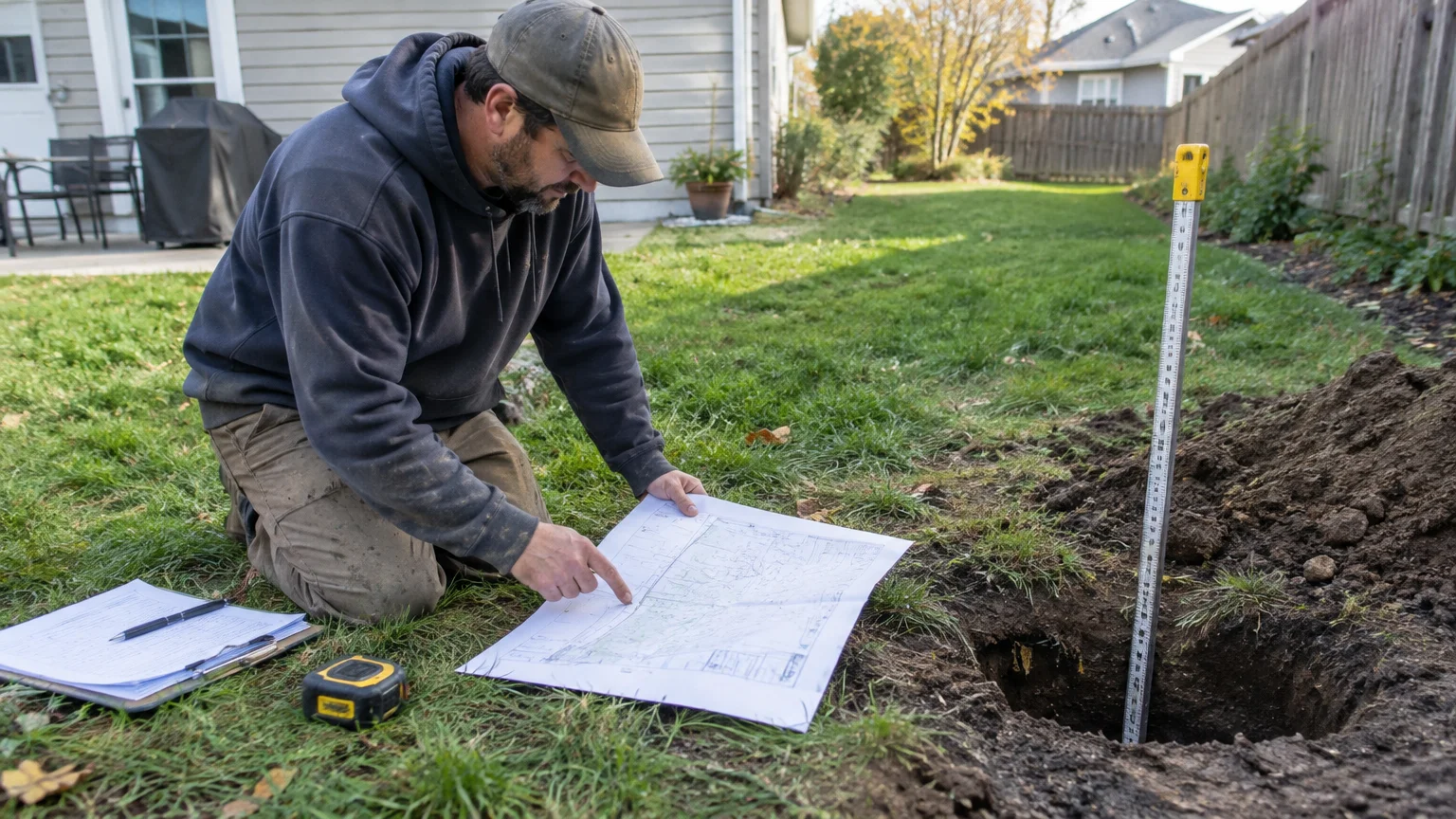
A leach field is often placed in shallow trenches below the ground. Still, there is no single depth for every septic system. The pipe, stone or chamber, soil cover, and natural soil layers all affect the final depth.
The best answer for a homeowner is simple. The field must protect the pipes and use soil that can treat wastewater. It should not be so deep that water cannot move through the soil. Local rules and the approved site plan decide the final design.
Typical trench depth and soil cover
A standard field may use trenches with pipes above a layer of stone. Some systems place pipes inside plastic chambers instead. Soil covers the system after installation. The lawn may look flat even when the pipes follow a planned layout below it.
The distance from the lawn to the pipe is not the same as the distance to the trench bottom. These are two different measurements. A permit drawing may show both the trench depth and the finished soil cover.
Why leach field depth is not one fixed number
A leach field must work with the soil below it. The soil needs enough space to accept and treat wastewater. Clay, rock, or high seasonal groundwater can limit where the field can go.
Some searches use the word “leech,” but leach field is the standard term. A septic drainfield may be shallow, raised, or built with another approved design. The right depth comes from the site review, not from a general rule alone.
What determines how deep a leach field should be?
Soil and groundwater are two main factors that guide field depth. The design must leave enough good soil below the area where water spreads. It must also keep wastewater away from groundwater and other protected areas.
A perc test, or percolation test, checks how fast water moves through soil. A qualified septic professional or local authority may arrange this test. The result is only one part of a site review. Soil type, slope, groundwater, rock, and the planned home also matter.
Soil type, seasonal groundwater, and restrictive layers
Sandy soil may let water move fast. Clay soil may drain slowly. Neither result alone decides the right depth. The system needs a balance between water movement and natural treatment.
Groundwater can rise during wet seasons. A field that looks safe during a dry visit may have less usable soil after heavy rain. A restrictive layer, such as hard clay or bedrock, can also limit the system.
Slope, site layout, and available usable soil
Slope affects how water moves through pipes and how the field is divided. A level lot may support a standard layout. A sloped lot may need a pump or a raised design.
Space matters too. The field must fit around the house, well, property lines, driveway, trees, and drainage areas. Setbacks vary by state and local rule. Property owners in Snellville should use approved plans instead of copying a nearby system.
How much soil cover should be over a leach field?
A leach field needs enough soil cover to protect the pipes and treatment area. It also needs the right soil conditions for air and water movement. The correct cover depends on the system design, local rules, and materials above the pipes.
Too little cover can expose pipes to weather, animals, tools, or traffic. Frost may affect shallow parts in some places. Too much cover can reduce air movement, change drainage, add weight, and make the field harder to check.
Balancing protection, drainage, and oxygen flow
Healthy soil has small air spaces. These spaces support the natural process that treats wastewater. Compacted soil has fewer air spaces and may not let water move away well.
The finished ground should send rain away from the field. Gutters, downspouts, swales, and yard drains may need to direct water away. Adding soil without checking the plan can change how water reaches the system.
Why too little or too much cover can cause problems
A thin layer may leave the system open to damage. A thick layer may bury access points and make future care harder. It may also put weight on pipes or chambers that were not made for heavy loads.
Do not use a tractor, dump truck, or similar machine to spread soil over the field without advice. Even a short drive can compact soil or damage buried parts. The surface should stay close to the approved finished grade.
Are leach fields installed at different depths?
Yes. Leach fields can have different depths and layouts. The design depends on soil, groundwater, lot shape, wastewater flow, and local approval. A standard septic drainfield is only one type of system.
The terms shallow, raised, mound, and pressure-dosed describe designs made for different site limits. They do not mean that one system is always better. Each system must fit the property and be cared for as planned.
Conventional trenches, beds, and shallow systems
A trench system places pipes or chambers in separate narrow runs. A bed system uses one wider area. Both spread wastewater through prepared soil, but their shapes and water loads differ.
A shallow system may work where good soil starts near the surface. It may need careful grading and protection from traffic. Its access points may be easier to find, but that does not make it safe to dig there.
Raised, mound, pressure-dosed, and alternative systems
A raised or mound system adds suitable soil above the natural ground. This can help when natural soil is too shallow or groundwater is too close. The field may appear as a gentle rise in the yard.
A pressure-dosed system uses a pump to send wastewater in planned doses. Other systems may use filters, treatment units, or other approved parts. Their depths and care needs can differ from a basic gravity system. Septic Tank Service Snellville can help property owners understand which type of system appears to be on the site before work begins.
How can you find the depth of a leach field on your property?
The safest way to learn how to find a field is to start with records. Then confirm the layout on the property. A permit, as-built drawing, or septic inspection report may show the tank, pipes, field, and finished grades. Records are safer than guessing from grass color or the shape of the ground.
Collect documents before digging. Useful records may come from the county health department, building office, former owner, septic installer, or property manager. Record access rules differ across the United States.
Checking permits, as-built drawings, and property records
An as-built drawing shows what was installed and where it was placed. It may list trench lengths, elevations, pipe locations, tank size, and distances from fixed points. Older drawings may be less exact after landscaping or remodeling.
Compare the drawing with the current property. Additions, patios, driveways, grading, and fences may have changed the yard. If you cannot find a plan, a local septic professional may use safe locating methods to trace the system.
Using inspection access points and careful surface clues
Tank lids, risers, cleanouts, and distribution boxes can offer useful clues. A distribution box sends wastewater into separate field lines. It may sit between the tank and the field.
Surface clues may include a small mound, greener grass, uneven settling, or a line of cleanouts. These clues do not prove the field’s depth or location. Never probe blindly with a metal rod or dig near buried pipes. Before landscaping or building, have the field marked by someone who understands septic layouts.
What should you avoid doing over a leach field?
Keep a leach field open, lightly used, and free from extra water. Grass or another approved shallow cover is often safest. Keep vehicles, buildings, pools, sheds, and heavy loads away from the field.
Protect the field from changed grades and deep roots. A small yard project can harm the system if it blocks air, adds weight, or sends stormwater into the trenches. Check the permit before changing the ground.
Landscaping, structures, vehicles, and heavy equipment
Deep-rooted trees and large shrubs can grow into pipes or chambers. Concrete, asphalt, and patios can block air and make repairs harder. Play equipment, storage sheds, and parked vehicles can press down the soil.
Simple care is often safe for homeowners. This may include mowing with light equipment, removing invasive plants, and keeping access lids visible. Digging, grading, pipe repair, and system changes need more care and should be handled by a qualified professional.
Drainage changes, irrigation, and deep-rooted plants
Sprinklers should not soak the field. Roof water should not drain across it. French drains, retaining walls, and landscape berms can change the way water moves through soil.
Avoid planting trees close to the field unless a septic professional approves the choice. Do not add soil, remove soil, or spread deep mulch over the system. These changes can hide warning signs and affect how the field works.
When should a professional inspect or locate a leach field?
A professional should inspect or locate a leach field before digging, building, grading, major planting, or transferring property. Help is also wise when you notice sewage odors, wet spots, slow drains, surfacing wastewater, or unusually green grass over the field.
A septic professional can locate key parts, review access points, check distribution, and look for signs of saturation or damage. An inspection does not replace local permits or health records. It adds a site check to the information you already have.
Warning signs of depth, drainage, or distribution problems
Watch for these signs:
- Wet soil that stays damp when nearby ground is dry
- Sewage odors near the tank or drain field
- Slow drains throughout the building
- Wastewater surfacing or pooling in the yard
- Grass that grows much greener over one part of the field
- Soil settling, erosion, or exposed pipes
One sign does not prove that the field has failed. Rain, blocked plumbing, a full tank, or a damaged pipe can cause similar problems. A prompt inspection can help separate a small issue from a larger drain field problem.
What to confirm before repairs, construction, or septic pumping
Before work starts, confirm the tank location, field boundaries, pipe direction, access points, and approved grades. Also share records about past repairs, additions, pumps, alarms, and unusual water use.
Septic tank pumping removes solids from the tank, but it does not repair a damaged drain field. Pumping can still support good system care when planned around the tank design, household use, and professional advice. Septic Tank Service Snellville serves property owners in the main Snellville area, from Downtown Snellville to Loganville, Lilburn, Grayson, Lawrenceville, and nearby communities. The team can help identify the septic work a site may need.
Frequently Asked Questions
How deep should a septic tank be?
A septic tank may sit at different depths based on its location, soil cover, access needs, and local approval. The tank should stay reachable for inspection and pumping. Use the permit or as-built drawing instead of guessing from the lawn. A riser may keep the lid closer to the ground surface.
What is a septic system?
A septic system treats wastewater on the property where it is made. It usually includes a tank, pipes, and a leach field. Solids settle in the tank, while liquid moves toward the drain field for soil treatment. Pumps, filters, alarms, and treatment units may be added for certain designs.
Who performs a perc test?
A qualified soil professional, septic designer, engineer, or other approved specialist may perform or arrange a perc test. The exact rule depends on state and county requirements. The local health department can explain who may do the work. The test checks soil drainage, but it is not the same as a full septic inspection.
How far does a septic tank need to be from a house?
The required distance depends on state and local rules, site conditions, and the approved septic plan. Setbacks may also apply to wells, property lines, streams, driveways, and buildings. Check with the local permit office or ask a qualified professional to review the site before moving or installing a tank.
How do you spell cesspool?
The standard spelling is cesspool. A cesspool is not the same as a modern septic tank and approved leach field. It is an older type of underground wastewater structure that may not meet current rules. Ask the local authority about the system type before planning repairs or changes.
Key Takeaways
- Leach field depth varies with soil, groundwater, slope, and system design.
- Pipe depth and trench depth are different measurements.
- Permit records and as-built drawings are the best places to start.
- Keep vehicles, buildings, deep roots, and extra water away from the field.
- Professional locating is wise before digging, building, or changing grades.
Conclusion
The question “how deep is a leach field” has no single answer for every property. A standard field may be shallow, while a mound or pressure-dosed system may use another layout. Soil, groundwater, local rules, and the approved plan decide the proper placement.
Property owners can start by finding permits, drawings, tank access points, and past inspection records. They can safely mow the area and keep heavy loads away. Digging, grading, locating buried lines, and checking wet areas should be done with care.
Septic Tank Service Snellville helps property owners understand septic needs throughout Snellville. Contact us to arrange help locating, checking, or maintaining a leach field before your next property project.