The septic tank pump replacement cost depends on the pump, system design, access, labor, testing, and parts. Simple replacements may need less work than repairs with buried wires, damaged floats, or control issues. A written quote confirms the final cost after the system is checked.
A failed pump can stop wastewater from moving. An alarm may sound, or drains may slow down. Quick action can help keep a small pump issue from causing a larger septic problem.
Septic Tank Service Snellville helps property owners understand their choices. This guide explains the main cost factors, what a quote should cover, and when professional help is needed.
Table of Contents
- What affects septic tank pump replacement cost?
- How does tank size affect pump replacement cost?
- How does access affect septic pump replacement cost?
- How does septic system type change the replacement cost?
- How does location affect septic tank pump replacement cost?
- What should a septic pump replacement quote include?
- When should you get a quote for septic pump replacement?
- Frequently Asked Questions
What affects septic tank pump replacement cost?
The main factors are the pump, labor, access, electrical parts, testing, and disposal. The septic tank pump replacement cost can change when the technician finds damage beyond the pump. A quote should list each part of the work in plain language.
A septic pump moves wastewater from a tank to a drainfield, treatment unit, or higher point. The pump must match the system’s flow needs and lift height. Lift height is the vertical distance the pump must move wastewater. A weak pump may run too long or fail soon.
Which parts may need replacement?
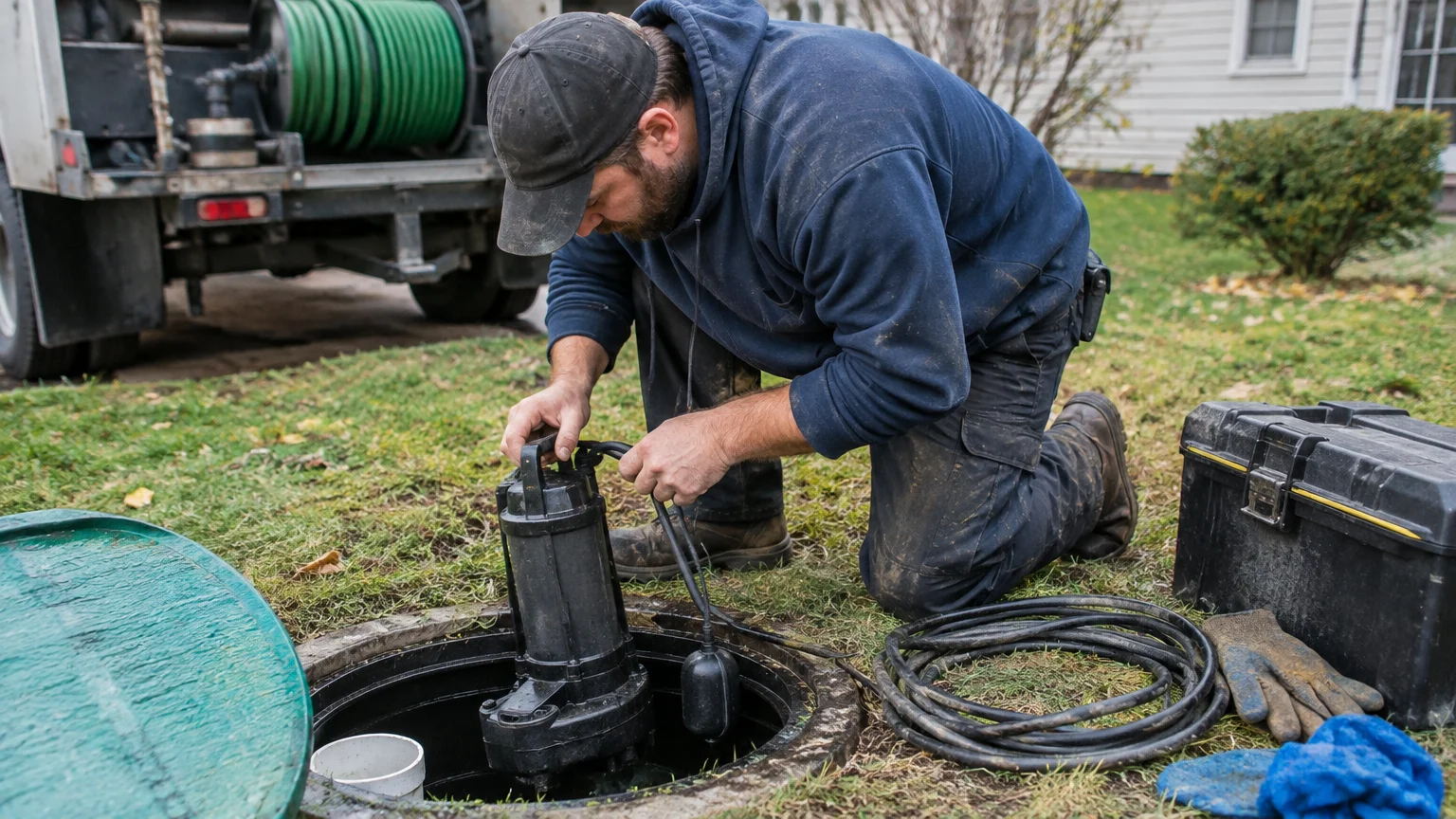
The pump may not be the only failed part. A technician may find a bad float switch, alarm, check valve, wire, control panel, or discharge pipe. A blocked line or poor power supply may cause the trouble instead of a worn pump.
A careful check helps find the cause. For example, a failed float can make a pump run too often. A clogged discharge line can make a good pump seem weak. Replacing the pump without checking these parts may lead to another service problem.
Labor also depends on the work area. A pump in an easy-to-reach tank may take less work to remove than one under soil, concrete, shrubs, or a deck. Disposal rules may affect the job because old pumps and dirty materials must be handled safely.
Why can the quote differ from the first diagnosis?
An early diagnosis may happen before the tank is opened or the wires are tested. Once the technician sees the pump chamber, more facts become clear. The quote may change if hidden damage, unsafe wiring, or another failed part is found.
Homeowners should ask what the first check covered. They should also ask what could change the repair plan. Septic Tank Service Snellville can help Snellville property owners compare the diagnosis with the proposed work. The final cost should be confirmed in writing before work starts.
How does tank size affect pump replacement cost?
Tank size affects the pump choice, access time, and work around the system. Tank size alone does not decide the septic tank pump replacement cost. The pump must also match the system layout, wastewater volume, lift height, and discharge distance.
A larger property or busy home may create more wastewater. That does not always mean the largest pump is best. An oversized pump may cycle poorly, waste energy, or put extra stress on the system. The right pump comes from the system’s design and needs.
How is the right pump matched to the system?
A technician may check the pump chamber, pipe size, float settings, control panel, and discharge route. The pump’s flow rate and lift rating must work together. Flow rate means how much wastewater the pump can move. Lift rating means how high it can move that water.
The technician may review the permit, system records, or maker’s information. These records can show the intended pump type. If records are missing, the system may need a closer check before a replacement is chosen.
Tank size can also affect access to the pump. A deep tank may need longer tools or extra safety steps. A large chamber may hold more wastewater during service. These details affect labor and preparation, not only the pump.
When does tank size create extra work?
Extra work may be needed when the pump chamber is deep, the lid is hard to remove, or the equipment sits below the access point. A homeowner should never enter a septic tank or pump chamber. Dangerous gas and low oxygen can cause serious harm.
Property owners can look for warning signs from above. They can keep the lid area clear and share system records with the technician. Septic Tank Service Snellville can review the site before suggesting the right replacement plan.
How does access affect septic pump replacement cost?
Access often changes the work more than homeowners expect. A pump near a clear riser is easier to inspect than one under soil, landscaping, a driveway, or a building. Limited access can add digging, cleanup, equipment needs, and surface repair.
A riser is a vertical pipe that brings a tank opening closer to the ground. Risers can make future checks and pumping easier. Without one, the technician may need to find the lid and uncover it with care.
How do buried tanks and lids affect the work?
A buried tank may need careful digging before the pump can be reached. The technician may use records, probing tools, or other safe methods to find the tank. Homeowners should not dig deeply without care because buried lines and tank lids can create hazards.
A septic tank lid should stay secure after service. A damaged or missing lid may need repair because it can let water into the tank or create a fall risk. A technician may suggest risers or safer access when the opening is hard to find.
Landscaping can also affect the repair. Plants, roots, fences, sheds, and stone may limit equipment access. Concrete and asphalt need a different plan than open soil. The quote should say whether surface removal or repair is included.
What can homeowners do before the visit?
Homeowners can move loose items, unlock gates, secure pets, and mark known utility lines. They can share the location of the tank, cleanout, control panel, and power source if known. They should not remove electrical covers or open the tank without help.
A clear work area helps the inspection go smoothly. It also helps the technician find the real cause of the problem. If the property is in the main Snellville area, local site conditions may guide how the visit is planned. Nearby communities may have different access needs.
How does septic system type change the replacement cost?
The septic system type affects the pump, controls, alarms, and testing. A conventional system may use different parts than an aerobic or advanced treatment system. The septic tank pump replacement cost may rise when several connected parts must work together.
A conventional system sends wastewater from the home to a tank and then to a drainfield. Some systems use a pump tank when gravity cannot move wastewater to the next stage. Advanced systems may use air pumps, treatment chambers, dosing controls, or other special parts.
How do conventional and advanced systems differ?
Conventional systems often have fewer moving parts. Still, the pump must match the pipe layout and dosing plan. A dosing plan controls when wastewater moves to the next treatment area.
Aerobic systems use air and natural activity to treat wastewater. They may have an air pump, blower, control panel, alarm, and timed settings. Replacing one part without checking the others may leave the system out of balance.
Advanced systems may use parts made for one model. The technician may need the model number, service records, or approval details. The wrong part can cause poor treatment, alarms, or early failure.
What related parts may need attention?
A pump replacement may include checks of the float switches, alarm, check valve, wires, control panel, and discharge pipe. The technician may also inspect the pump chamber for sediment, rust, or damage. Each part has a different job, so the quote should name the recommended work.
The alarm is especially important. It warns the owner when the liquid level rises too high or power is lost. An alarm should not be ignored or silenced before its cause is found.
Owners of rental homes and businesses should keep service records. These records help the next technician understand the system. They also help buyers and investors plan future septic tank pumping and repair needs.
How does location affect septic tank pump replacement cost?
Location affects labor conditions, permit rules, disposal needs, travel distance, and local system designs. Work in a busy area may have tight access and strict site rules. Rural work may involve long drives, private roads, or limited utility records.
Local rules can vary by state, county, and health department. Some systems need approval before certain repairs. Others may need an inspection, records, or a licensed professional. Property owners should ask which rules apply before approving work.
Why do regional conditions matter?
Soil type can affect digging and surface repair. Clay, rock, wet soil, and steep ground may slow access work. Weather can also affect safe digging and electrical testing.
Local work conditions may differ between communities. Disposal services, equipment access, and permit steps can change from one area to another. That is why online estimates may not match a specific property.
In the Georgia service area, a technician can explain which local conditions matter. Septic Tank Service Snellville serves customers across Snellville and can help property owners understand what a site visit should cover.
What should property owners ask about local rules?
Owners should ask whether a permit, inspection, or approval is needed. They should also ask who will handle the paperwork and whether the work must follow maker instructions. A clear answer can prevent delays after the pump is replaced.
Buyers and investors should review septic records before closing on a property. They can ask when the system was last pumped, whether alarms have sounded, and whether repairs were completed. These questions may show risks that a basic home check misses.
What should a septic pump replacement quote include?
A useful quote should describe the problem, pump, labor, related parts, testing, and cleanup. It should also explain work that is not included. The final cost should be confirmed after the system is inspected and the needed work is clear.
A quote should not use vague words such as replace pump and repair system. Homeowners need enough detail to compare options and understand the plan. The quote should name the equipment and explain why it fits the system.
Which items should appear in the quote?
A complete quote may include:
- The pump model, capacity, and expected use
- Removal and safe handling of the old pump
- Checks of floats, wires, valves, alarms, and controls
- Installation steps and connection checks
- Electrical and system tests after installation
- Tank access, digging, cleanup, and surface repair
- Permit, inspection, or disposal tasks when required
Not every job needs every item. The list shows what the quote covers. If a part is not included, the homeowner should know before approving the work.
What questions should homeowners ask?
Homeowners should ask what caused the failure, whether the pump is the only problem, and how the new part matches the system. They can also ask how the system will be tested after installation. These questions help prevent confusion and support a better repair choice.
They should ask what happens if hidden damage appears after work begins. The answer should explain how added work is approved. A written change process helps homeowners, tenants, investors, and property managers.
After installation, the technician should confirm that the pump starts, stops, and moves wastewater properly. The alarm should be tested too. The homeowner should receive basic care steps and available equipment information.
When should you get a quote for septic pump replacement?
A property owner should request a quote when the pump fails, the alarm turns on, wastewater backs up, or the system has repeated trouble. Prompt testing matters because continued use can worsen the problem. A quote also helps when buying a property with an older or poorly documented system.
Some symptoms need quick attention. Sewage odors, wet ground near the tank, slow drains, gurgling pipes, or wastewater near the drainfield may point to a larger issue. People and pets should stay away from sewage and unsafe areas.
What signs need professional evaluation?
Warning signs include:
- A high-water alarm that stays active
- Drains that slow after normal household use
- Sewage odors inside or outside the property
- Wet or unusually green ground near the system
- A pump that runs constantly or will not start
- Repeated breaker trips near septic equipment
A homeowner may check whether a breaker has tripped and whether an alarm has power. They can reduce water use while waiting for help. They should not open electrical panels, enter the tank, or handle sewage.
How can homeowners prepare for an accurate assessment?
Homeowners should gather permits, pumping records, repair bills, equipment labels, and alarm details. They should note when the trouble began and whether it changes after heavy water use. This helps the technician separate a pump failure from a drainfield or plumbing issue.
The owner should provide safe access to the tank, pump controls, and power area. Tenants should tell the property owner or manager before approving major work. Investors and buyers should request a written report that explains the system condition.
Key Takeaways
- Septic tank pump replacement cost depends on parts, labor, access, testing, and system design.
- Tank size matters, but pump capacity must also match lift height and flow needs.
- Buried tanks, hard access, damaged wires, and poor records may add work.
- Quotes should list the pump, related parts, installation, testing, cleanup, and exclusions.
- Alarms, backups, odors, wet soil, and constant pump operation need prompt checks.
Conclusion
A pump replacement is easier to plan when the owner understands the full system. The pump, tank, controls, wires, discharge line, and access conditions all matter. A careful inspection gives the technician the facts needed to suggest the right repair.
Septic Tank Service Snellville can help property owners review warning signs and prepare for a clear assessment. Contact us to arrange a septic pump replacement evaluation.
Frequently Asked Questions
How long does a septic pump usually last?
A septic pump may last for many years. Its service life depends on use, water levels, maintenance, power issues, and installation quality. Frequent cycling, blocked lines, or poor wiring can shorten its life. A technician can check the pump and controls before suggesting replacement.
Can a homeowner replace a septic tank pump?
Most homeowners should not replace the pump themselves. The work may involve sewage, electrical wires, confined-space dangers, heavy equipment, and local rules. A homeowner can check for an obvious tripped breaker and reduce water use, but pump removal and testing need a qualified professional.
What is the difference between a septic pump and a septic tank?
A septic tank holds wastewater and lets solids settle. A septic pump moves liquid wastewater to another part of the system when gravity cannot do the job. Some properties have a pump tank separate from the main septic tank. The system design shows which part needs service.
How can someone find a septic tank lid?
A homeowner can review property records, look for cleanouts, and check old service notes. The lid may be near the home or along the line to the drainfield. Digging needs care because utility lines may be nearby. A professional can help find and uncover the lid safely.
Who installs septic tanks and replacement pumps near me?
Licensed septic professionals and approved installers handle septic tanks and pump replacements. The right provider depends on local rules, system type, and the repair needed. Property owners can ask Septic Tank Service Snellville about the inspection process, system records, parts, testing, and required approvals.
If you are unsure what is wrong, having the system checked can help prevent a larger repair. Septic Tank Service Snellville can explain the next steps for your property.
If you are not sure what you are dealing with, it is worth having someone look at it before it turns into a bigger job. Get in touch with Septic Tank Service Snellville today and we will tell you where you stand.